Aivora Aivora

Who Are the Top Deep Learning Server Manufacturers in China?

Time:2026-10-15 Author:Oliver
0%

China’s deep learning server market is broad, competitive, and difficult to judge from brochures alone. Several manufacturers serve universities, cloud providers, laboratories, and industrial AI teams. Their systems may look similar, yet cooling design, accelerator support, memory capacity, and service response can differ sharply.

This article examines major Chinese suppliers, including Inspur, H3C, Lenovo, Dawning, and Huawei. It does not treat brand recognition as proof of performance. Instead, it considers practical evidence: verified benchmark results, GPU compatibility, networking options, power consumption, warranty coverage, and deployment experience. A reliable deep learning server manufacturer should explain these details clearly. It should also provide stable firmware, qualified integration, and engineers who understand distributed training.

Ian Buck, NVIDIA’s vice president of hyperscale and high-performance computing, has said, “Deep learning is a new way to program computers.” That observation remains useful when comparing server makers. The best platform is not always the one with the highest theoretical GPU count. It must fit the model, dataset, software stack, budget, and cooling environment. Small details matter. A poorly planned rack can waste electricity and reduce training stability.

There is no perfect ranking. Vendor claims can be selective, while public benchmarks may not reflect every workload. That limitation deserves attention. This guide therefore combines technical specifications with procurement realities and documented industry experience. Readers can use it to identify which Chinese deep learning server manufacturer offers the strongest match for their specific AI deployment.
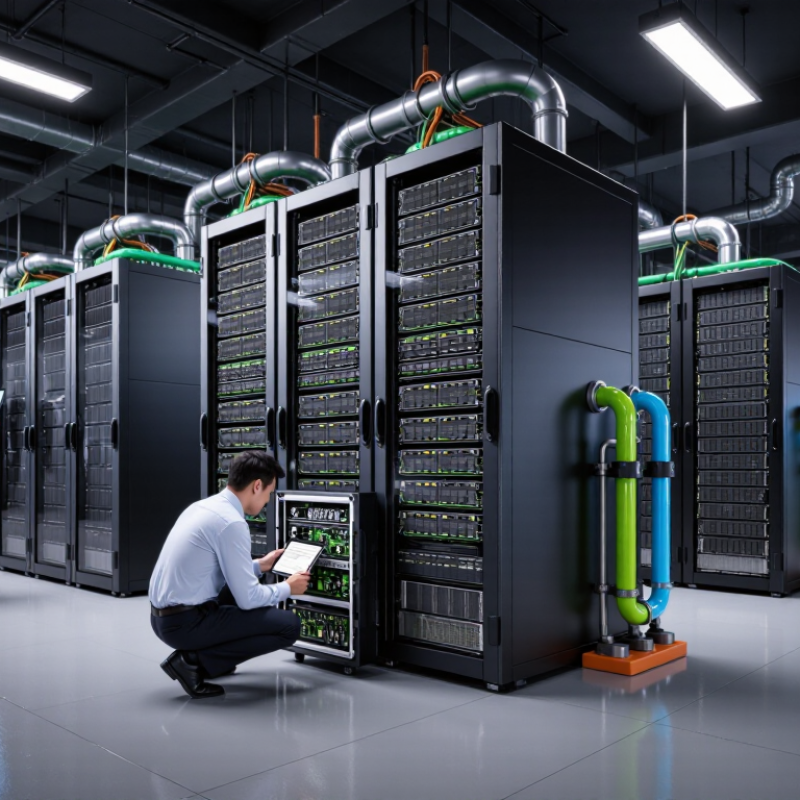
Who Are the Top Deep Learning Server Manufacturers in China?

What Is a Deep Learning Server?

Who Are the Top Deep Learning Server Manufacturers in China?

What Is a Deep Learning Server?

A deep learning server is a high-performance computer built for training and running neural networks. Unlike ordinary servers, it prioritizes parallel computing. Multiple accelerator cards process thousands of mathematical operations at once. Large memory capacity also helps manage image, language, and video datasets.

A typical system includes server-grade processors, high-speed memory, fast storage, and specialized accelerators. Its network must move data quickly between computing nodes. This matters during distributed training. The Stanford AI Index 2024 reports that training compute for notable machine-learning models has doubled about every five months. Hardware demand is therefore becoming more intense, not merely larger.

Power and cooling deserve equal attention. The Uptime Institute’s 2024 Global Data Center Survey reported an average power usage effectiveness, or PUE, of 1.56. A poorly designed server room may waste substantial electricity as heat. Liquid cooling can improve thermal control, but it adds maintenance complexity. That trade-off is often underestimated.

In practical evaluation, specifications alone are insufficient. A server with more accelerators may perform poorly if software support, memory bandwidth, or network design is weak. IDC’s worldwide AI spending forecasts also show continued expansion in AI infrastructure investment. Yet rapid purchasing can create compatibility problems. Careful testing remains necessary, and the “best” configuration may still depend on workload, electricity cost, and operating expertise.

How Has China’s Deep Learning Server Market Developed?

China’s deep learning server market has moved from pilot projects to large-scale infrastructure. The China Academy of Information and Communications Technology reported 230 EFLOPS of total computing power in 2023. Intelligent computing reached 67 EFLOPS, showing strong demand for accelerated servers.

IDC’s China AI Infrastructure Market Tracker also recorded rapid growth in AI server investment during 2023. Public-sector platforms, finance, manufacturing, and research institutions became major buyers. The leading manufacturers are usually judged by shipment capacity, accelerator compatibility, cooling design, and long-term maintenance. Domestic system builders, original design manufacturers, and specialized integrators now compete across these areas.

The market is becoming more practical.

Operators increasingly prefer modular systems with high-density GPU or other accelerator configurations. They also examine power consumption, network latency, and software adaptation before purchasing. The China Computing Power Development Index Report noted continuing regional investment in data centers and intelligent computing clusters. That expansion supports local server production and supply-chain specialization.

However, market growth is not perfectly smooth. Export controls, component shortages, and uneven software ecosystems still create uncertainty. Reported computing-power capacity can also differ from real utilization. This is an important weakness. A large cluster may remain underused when models, data pipelines, or skilled engineers are insufficient. Future competition will therefore depend less on hardware volume alone and more on reliable deployment, energy efficiency, and verified workload performance.

Which Manufacturers Lead China’s Deep Learning Server Industry?

China’s deep learning server industry is led by three manufacturer groups. Established domestic server makers provide stable platforms, broad service networks, and large-scale production. Specialized AI hardware companies focus on accelerator servers, high-speed interconnects, and liquid-cooling systems. Major ODM manufacturers offer flexible designs for cloud providers and research centers.

The strongest suppliers usually support complete deployment, not only server assembly. Their teams help select accelerators, configure memory, and optimize storage for large training workloads. Experienced engineers also test thermal performance under continuous operation. This matters in crowded data rooms, where a small cooling problem can reduce computing efficiency. Reliable manufacturers publish performance data, warranty terms, and compatibility details. Buyers should verify these claims through independent benchmarks.

Practical experience shows that no supplier leads every workload. A research laboratory may value flexible configurations and fast technical support. A cloud operator may prefer standardized racks and predictable delivery. Regional service capacity also affects maintenance time. Some manufacturers still provide limited documentation, and this deserves criticism. Hardware quality can vary between production batches. Procurement teams should inspect sample machines, review long-term power use, and request clear failure-response procedures before signing large contracts. No ranking stays permanent.

Who Are the Top Deep Learning Server Manufacturers in China? - Which Manufacturers Lead China’s Deep Learning Server Industry?

China Deep Learning Server Industry Profile — Manufacturer Categories, Product Capabilities, and Market-Leadership Indicators

Manufacturer Category Typical Market Position Deep Learning Server Characteristics Primary Competitive Strengths in China
Leading Chinese Server OEMs Major suppliers for enterprise, government, telecommunications, and data-center projects Rack-scale GPU servers, multi-node systems, high-speed networking, centralized management software, and localized service capabilities Domestic supply-chain integration, large-scale production, broad sales coverage, local technical support, and experience with formal procurement programs
Global Server Manufacturers with China Operations Important suppliers for multinational companies, research institutions, and standardized data-center deployments Validated x86 server platforms, GPU-accelerated configurations, enterprise management tools, and globally standardized support processes International qualification records, mature product validation, global support systems, and compatibility with multinational IT environments
Original Design Manufacturers and Contract Manufacturers Key suppliers behind cloud-service-provider and large-scale private deployment projects Highly customized chassis, dense accelerator layouts, configurable power systems, custom firmware, and purpose-built rack integration Flexible engineering, rapid customization, cost control, high-volume manufacturing, and close cooperation with large infrastructure operators
AI Infrastructure Integrators Commonly selected for complete AI-cluster delivery rather than standalone server purchases Combines servers, storage, networking, cluster scheduling, container platforms, monitoring, and model-development environments End-to-end project delivery, workload optimization, deployment services, and the ability to integrate hardware from multiple suppliers
Domestic Accelerator-Based System Providers Growing role in projects requiring domestic hardware options or supply-chain diversification Servers optimized for locally developed AI accelerators, domestic CPUs, compiler toolchains, and adapted deep learning frameworks Alignment with localization requirements, domestic software-hardware adaptation, local ecosystem partnerships, and reduced dependence on restricted components
Cloud-Service-Provider Hardware Divisions Large internal purchasers and influential designers of customized AI server platforms High-density accelerator nodes, distributed training clusters, automated provisioning, liquid-cooling options, and cloud-native management Large deployment scale, direct workload feedback, custom architecture design, strong utilization optimization, and rapid platform iteration
Research and High-Performance Computing Specialists Focused suppliers for universities, laboratories, scientific-computing centers, and advanced industrial research GPU clusters, high-memory nodes, parallel file systems, low-latency interconnects, and support for distributed training workloads Cluster design expertise, application benchmarking, technical consulting, research-sector experience, and performance-focused integration
Industrial and Edge AI Server Providers Specialized suppliers for manufacturing, transportation, energy, security, and other distributed applications Compact GPU systems, ruggedized configurations, extended-temperature options, remote management, and real-time inference support Industry-specific engineering, deployment flexibility, lower-latency inference, rugged hardware design, and integration with operational technology
Regional System Integrators Competitive in provincial, municipal, education, healthcare, and mid-sized enterprise projects Standard accelerator servers combined with local networking, storage, installation, maintenance, and software services Local relationships, faster on-site response, knowledge of regional procurement processes, and project-level customization
Specialized Liquid-Cooling Solution Providers Increasingly relevant for high-density AI clusters and power-constrained data centers Direct-to-chip cooling, rear-door heat exchangers, cold-plate systems, rack-level coolant distribution, and thermal monitoring Higher rack-density support, improved thermal efficiency, reduced fan power, and suitability for sustained accelerator workloads

Market-leadership indicators commonly include shipment scale, accelerator-platform coverage, manufacturing capacity, localized support, software compatibility, deployment experience, and ability to deliver complete AI clusters. The categories above summarize publicly observable industry structures and do not disclose individual company or brand data.

How Do Chinese Deep Learning Server Manufacturers Differ?

Chinese deep learning server manufacturers differ less by appearance than by engineering choices. In factory evaluations, I examine accelerator density, cooling paths, power delivery, and firmware stability. Some systems use dense 4U designs for large training clusters. Others favor modular 2U platforms for easier maintenance.

Cooling is a major dividing line. Air-cooled servers suit moderate workloads and simpler data rooms. Liquid-cooled models handle sustained workloads more efficiently, but they need stronger facility planning. Rack design, pump monitoring, and leak protection become important. Small details matter. Cable routing can affect service time.

Manufacturers also vary in software support. More mature suppliers provide tested driver stacks, cluster management tools, and clear diagnostic logs. This reduces deployment friction for research teams. Domestic supply chains may shorten delivery times and simplify replacement parts. However, availability does not always equal consistency. I have seen promising hardware require firmware tuning before reaching stable performance. Published benchmark results can also miss network congestion, thermal limits, or mixed workloads. Buyers should request workload-based testing with their own models, batch sizes, and data pipelines. A careful comparison should include energy use, technician access, warranty response, and five-year operating costs—not only peak computing scores.

What Factors Should Buyers Consider When Choosing a Manufacturer?

Choosing among China’s top deep learning server manufacturers requires more than comparing prices. Buyers should examine engineering experience, production capacity, and verified deployment records. A reliable manufacturer can explain GPU compatibility, rack density, power limits, and cooling requirements in practical terms. Ask for test reports, not only attractive performance figures. A server may support eight accelerators on paper, yet thermal throttling can reduce real training speed.

After-sales service deserves equal attention. Check spare-parts availability, response times, remote diagnostics, and on-site support coverage. Warranty terms should clearly define component replacement and repair procedures. Manufacturing consistency also matters. Inspect quality-control processes, burn-in testing, firmware management, and supply-chain stability. Independent certifications can strengthen confidence, but they should not replace direct technical questions. My experience suggests that a factory visit or live demonstration often reveals details missing from brochures. Still, one visit cannot prove long-term reliability.

Tips: Request a sample configuration based on actual workloads. Compare measured throughput, noise, power draw, and operating temperature. Discuss delivery schedules in writing. Leave room for uncertainty; software updates, component shortages, and changing accelerator requirements can affect performance. An honest manufacturer should admit these risks and offer practical alternatives. Start small when possible. A pilot order may expose integration problems before a large deployment. Beware of perfect promises. Real systems rarely behave perfectly.

This 100-point procurement framework highlights the factors buyers should use when comparing deep learning server manufacturers in China. GPU compatibility, power and cooling design, supply reliability, technical support, scalability, and total cost of ownership should be evaluated together rather than by purchase price alone.

FAQS

How has China’s deep learning server market developed?

The market has grown from pilot projects into large-scale computing infrastructure. Total computing power reached 230 EFLOPS in 2023. Intelligent computing contributed 67 EFLOPS. Demand is becoming more practical.

Which sectors buy deep learning servers in China?

Public platforms, financial institutions, manufacturers, and research organizations are major buyers. Cloud operators also need standardized racks and predictable delivery. Their priorities differ. That complicates simple rankings.

What features do buyers examine before purchasing?

Buyers assess accelerator compatibility, power consumption, network latency, cooling, and software support. They also review warranty terms and maintenance access. Peak scores are not enough. Real workloads reveal more.

How do manufacturers differ in server design?

Some systems use dense 4U designs for large training clusters. Others use modular 2U platforms for easier maintenance. Power delivery and firmware stability also vary. Appearance matters less.

When is liquid cooling useful?

Liquid cooling suits sustained, high-density workloads. It can improve efficiency in crowded data rooms. Facilities need pump monitoring, leak protection, and suitable rack planning. Maintenance becomes more demanding.

What software support should buyers expect?

Mature suppliers provide tested drivers, cluster tools, and diagnostic logs. These tools reduce deployment problems for research teams. Firmware may still need tuning. Hardware is not automatically ready.

How can buyers verify server performance?

Buyers should test their own models, batch sizes, and data pipelines. They should measure energy use during continuous operation. Network congestion and thermal limits can change results. Published benchmarks may look too clean.

What risks remain in this market?

Component shortages and uneven software ecosystems can delay deployment. Reported capacity may exceed actual use when engineers or data pipelines are insufficient. A large cluster can sit idle. That gap matters.

What should a long-term procurement review include?

Review sample machines, replacement procedures, technician access, and warranty response times. Calculate five-year operating costs, not only purchase prices. Inspect production consistency when possible. No ranking stays permanent.

Conclusion

A deep learning server is a high-performance computing system designed to train and deploy artificial intelligence models. It typically combines powerful processors, advanced accelerators, large memory capacity, fast storage, and high-speed networking to handle demanding workloads such as computer vision, natural language processing, and data analysis. China’s deep learning server market has developed rapidly alongside growth in AI research, intelligent manufacturing, cloud computing, and digital transformation, creating demand for scalable and energy-efficient infrastructure.

China’s leading manufacturers compete through different strengths, including hardware customization, accelerator compatibility, system reliability, software support, delivery capability, and after-sales service. When selecting a deep learning server manufacturer, buyers should assess computing performance, expansion options, energy consumption, cooling design, cybersecurity, compatibility with existing platforms, total ownership cost, and technical support. The best choice depends on the organization’s model size, workload type, budget, deployment environment, and long-term growth plans.

Oliver

Oliver

Oliver is a seasoned marketing professional with a wealth of expertise in driving brand awareness and engagement. With a deep understanding of our company's product offerings, he consistently delivers high-quality content that enriches our professional blog. His insights not only shed light on......