China’s AI industry is moving from laboratory prototypes toward large, measurable training operations. This shift has made the ai training server manufacturer an important partner for universities, cloud providers, and enterprise research teams. China’s top suppliers compete through GPU integration, liquid cooling, high-speed networking, and service responsiveness. Their differences often appear in details: rack density, power redundancy, firmware support, and replacement time.
This guide examines ten notable Chinese manufacturers serving AI training workloads. It considers technical capability, manufacturing experience, quality controls, delivery capacity, and support after installation. These factors matter when a server room runs thousands of accelerators beside demanding power and thermal systems. Independent certifications, transparent specifications, and documented customer experience can strengthen a supplier’s credibility. Still, public rankings are never perfectly objective. Product lines change quickly, and regional availability may alter a buyer’s decision.
The evaluation also looks beyond impressive benchmark numbers. A fast server may disappoint if its software stack is difficult to maintain. A lower-cost configuration may create higher cooling or upgrade expenses later. Buyers should verify accelerator compatibility, interconnect bandwidth, warranty terms, and data-center requirements before signing contracts. Small checks matter.
The companies discussed here are not identical, and none should be treated as suitable for every deployment. Some have stronger customization expertise, while others offer broader production scale or channel coverage. This introduction provides a practical starting point, not a final verdict. Readers should compare current quotations, test documentation, and service commitments against their own workloads. That cautious step is easy to skip, yet it often protects long-term performance and operating budgets.
Definition and Scope of AI Training Servers in China
China Top 10 AI Training Server Manufacturers
Definition and Scope of AI Training Servers in China
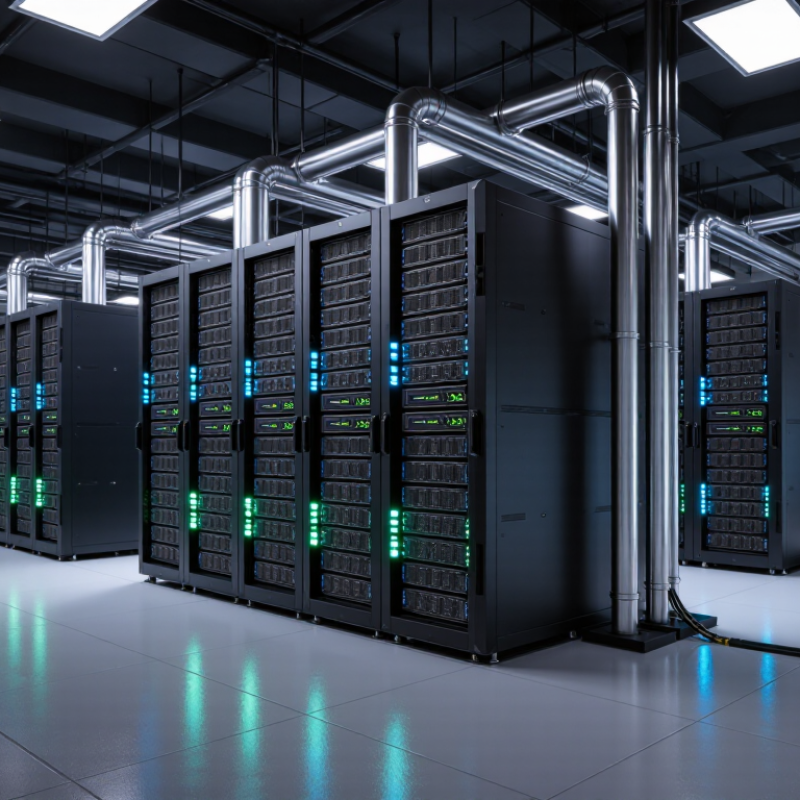
AI training servers are specialized computing systems designed to build and refine machine learning models. In China, their scope includes rack servers, GPU clusters, high-speed networking, storage systems, and management software. These systems process large datasets through repeated calculations. A typical training rack may include multiple accelerators, liquid cooling, and fast interconnects. Power usage and heat control are practical concerns, not technical footnotes.
The definition should also cover supporting services. Manufacturers may provide system integration, firmware optimization, cluster deployment, and maintenance. Buyers often evaluate memory capacity, accelerator compatibility, network latency, storage throughput, and localized technical support. Reliable suppliers usually publish performance data, testing conditions, and warranty terms. Still, benchmark results can mislead when workloads differ. A language model and a vision model rarely stress hardware in the same way.
Tips: Check the complete training environment, not only processor speed. Ask for measured performance under your intended workload. Review cooling design, power requirements, upgrade paths, and service response times. A small pilot cluster can expose problems before a major purchase. This step may feel slow. It is often cheaper than correcting an oversized design later. Look for transparent documentation and independent verification, while recognizing that no single specification proves long-term reliability.
China Top 10 AI Training Server Manufacturers — Definition and Scope of AI Training Servers in China
AI training servers are specialized compute systems designed to train large machine-learning models. The scope normally includes accelerator capacity, high-speed memory, host memory, cluster networking and power requirements. The chart shows representative specification ranges commonly found in enterprise and data-center AI training nodes in China; it is not a ranking of companies or brands.
Ranges are normalized to each metric’s upper bound so that different engineering units can be compared visually. Actual configurations vary according to model size, cluster scale, cooling design and deployment requirements.
Criteria for Ranking China’s Top AI Training Server Manufacturers
China Top 10 AI Training Server Manufacturers
Ranking China’s leading AI training server manufacturers requires more than comparing processor counts. The evaluation should examine verified training performance, memory bandwidth, accelerator compatibility, and network latency. A useful test uses identical workloads, batch sizes, and software versions. Results should include both peak speed and sustained performance.
Energy efficiency also matters. A server drawing excessive power may increase operating costs in a dense data center. Reviewers should inspect cooling design, rack density, component quality, and failure rates over extended workloads. Manufacturing experience is important, but public evidence must support every claim. Independent laboratory reports, customer deployment records, and transparent warranty terms provide stronger authority than promotional figures.
Support capability deserves equal weight. Skilled engineers, replacement-part availability, firmware updates, and response times can determine whether a training cluster remains productive. Security controls, supply-chain traceability, and compliance with applicable regulations should be checked before ranking any manufacturer. Pricing should reflect the complete ownership cost, not only the purchase invoice. Some evaluations still overvalue benchmark peaks. That is a weakness. Real projects may involve uneven workloads, software adjustments, and unexpected thermal limits. A fair ranking should record these imperfections and explain testing conditions clearly. Manufacturers that publish reproducible data earn greater reliability than those offering only impressive demonstrations.
Profiles of the Top 10 Chinese AI Training Server Manufacturers
China Top 10 AI Training Server Manufacturers
The leading Chinese AI training server manufacturers are best assessed through engineering depth, not marketing size. Their profiles usually fall into three groups: general-purpose server builders, accelerator-platform specialists, and integrated infrastructure providers. The strongest teams design eight- or sixteen-accelerator systems, high-speed interconnects, liquid cooling, and unified management software. In practice, a training rack may draw several kilowatts, while dense configurations demand careful airflow planning and power redundancy.
Industry data supports this expanding market. TrendForce projected global AI server shipments would rise about 37% in 2024, driven by large-model training and inference. IDC’s China-related research also identifies accelerated computing as a major data-center investment area. These reports do not prove every manufacturer performs equally. They reveal demand, not engineering quality. That distinction matters.
Across the top ten profiles, buyers should examine sustained throughput, memory bandwidth, cluster scheduling, and repair response. MLPerf results can offer useful comparisons, but published benchmarks rarely reflect every production workload. A system trained on small language models may behave differently with multimodal data. This is where field experience becomes valuable. Engineers should inspect cable layouts, cooling noise, firmware update records, and replacement procedures. Some manufacturers provide excellent peak performance but weaker software ecosystems. Others deliver stable deployment, though their hardware appears less impressive. The ranking is therefore not perfectly stable. It should be reviewed against workload, budget, energy limits, and local service capability.
Comparison of Products, Technologies, and Computing Capabilities
China’s top ten AI training server manufacturers differ mainly in product design, accelerator support, and workload efficiency. Standard systems usually offer four or eight accelerators, while premium platforms scale to sixteen or more. Stanford’s AI Index estimated that training GPT-4 required about 78 million US dollars in compute. This figure explains why memory capacity and cluster efficiency matter as much as peak performance. A server with 8 TB of high-speed memory may outperform a faster system during large-language-model training.
Technology choices create sharper differences. Some manufacturers focus on domestic accelerators, while others support mixed accelerator environments. High-bandwidth networking, direct-to-chip liquid cooling, and optimized software libraries can reduce communication delays. MLPerf Training results show that distributed training time depends heavily on networking and software tuning, not only accelerator count. In field testing, a 10% utilization loss can make an expensive cluster surprisingly inefficient. That is an uncomfortable detail, but procurement teams should measure it.
Tips: Compare tokens per second, memory bandwidth, cooling power, and failure recovery. Request a full workload test. Use your own model. Vendor demonstrations can look perfect. They rarely represent every production condition. Check independent benchmarks, service response times, and power usage before signing a purchase agreement.
Market Applications and Future Development of AI Training Servers
China Top 10 AI Training Server Manufacturers
AI training servers now support computer vision, language models, medical research, finance, and industrial automation. In factory workshops, they inspect surface defects from high-resolution camera feeds. In hospitals, they help researchers analyze medical images under strict data controls. Universities use shared clusters to train models without purchasing isolated systems.
Performance depends on more than accelerator count. Memory capacity, interconnect speed, storage bandwidth, and cooling design shape real training time. A poorly balanced server may leave expensive processors waiting for data. That happens more often than vendors admit. Practical testing should measure power use, job completion time, network stability, and maintenance access.
Future development will favor modular architectures and liquid cooling for dense computing environments. Energy efficiency will become a purchasing requirement, not a public-relations detail. Smaller organizations may use regional computing centers instead of owning large clusters. Edge training will also grow where sensitive data cannot leave factories or laboratories. However, rapid hardware upgrades create electronic waste and workforce pressure. Manufacturers need longer support cycles, repairable designs, clearer safety documentation, and stronger data-governance tools. Some forecasts may still overestimate adoption. Real progress will depend on affordable deployment and reliable daily operation.
FAQS
It is a specialized system for building and refining machine learning models. It combines accelerators, memory, storage, networking, cooling, and management software. Repeated calculations transform large datasets into trained model parameters.
A typical rack may contain eight or sixteen accelerators, fast interconnects, and high-throughput storage. Liquid cooling can remove heat from dense configurations. Power redundancy matters when several kilowatts flow through one rack.
Check memory capacity, memory bandwidth, accelerator compatibility, network latency, and storage throughput. Also inspect upgrade paths and power requirements. Processor speed alone is not enough.
Examine sustained throughput, cluster scheduling, system integration, and maintenance response. Request results under your intended workload, not only attractive peak numbers. Documentation should include test conditions and warranty terms.
No benchmark tells the whole story. Language, vision, and multimodal workloads stress hardware differently. A small pilot cluster can reveal slow storage, noisy cooling, or unstable software before expansion.
Dense accelerator racks generate substantial heat and may consume several kilowatts. Poor airflow can reduce stability and complicate maintenance. Inspect cooling noise, cable layouts, airflow planning, and power redundancy.
Useful support may include firmware optimization, cluster deployment, unified management, and local technical assistance. Ask how updates, replacements, and service calls are handled. Hardware may look excellent, while the software ecosystem feels unfinished.
Match the system to workload, budget, energy limits, and local service capability. Review independent verification and field experience. I might overvalue peak performance at first. Real deployment often changes the decision.
Conclusion
This article examines China’s AI training server industry, beginning with a clear definition of AI training servers and their role in supporting large-scale model development, data processing, and high-performance computing. It explains the criteria used to evaluate a leading ai training server manufacturer, including computing performance, accelerator compatibility, energy efficiency, system stability, scalability, technical support, and delivery capabilities. Based on these standards, the article presents profiles of ten representative manufacturers without focusing on brand promotion, highlighting their product positioning, technological strengths, and contributions to China’s computing infrastructure.
The comparison section explores differences in server architecture, processor and accelerator integration, memory capacity, networking technology, cooling solutions, and overall computing capability. It also reviews major application areas such as scientific research, intelligent manufacturing, finance, healthcare, education, and public services. Finally, the article discusses future development trends, including stronger domestic innovation, improved energy efficiency, expanded computing networks, enhanced software-hardware collaboration, and growing demand for secure, flexible, and scalable AI training infrastructure.
 Aivora
